From the Military Honey journal
Vitamin D 84 mcg Explained: What 3,360 IU a Day Means for You
Each gummy’s 84 mcg of vitamin D3 equals 3,360 IU, which is 420% of the Daily Value. That sits just under the adult upper limit of 100 mcg (4,000 IU) a day. A single Military Honey gummy stays inside that limit by itself, but a second gummy, a multivitamin or any other vitamin D product can take your daily total past it.
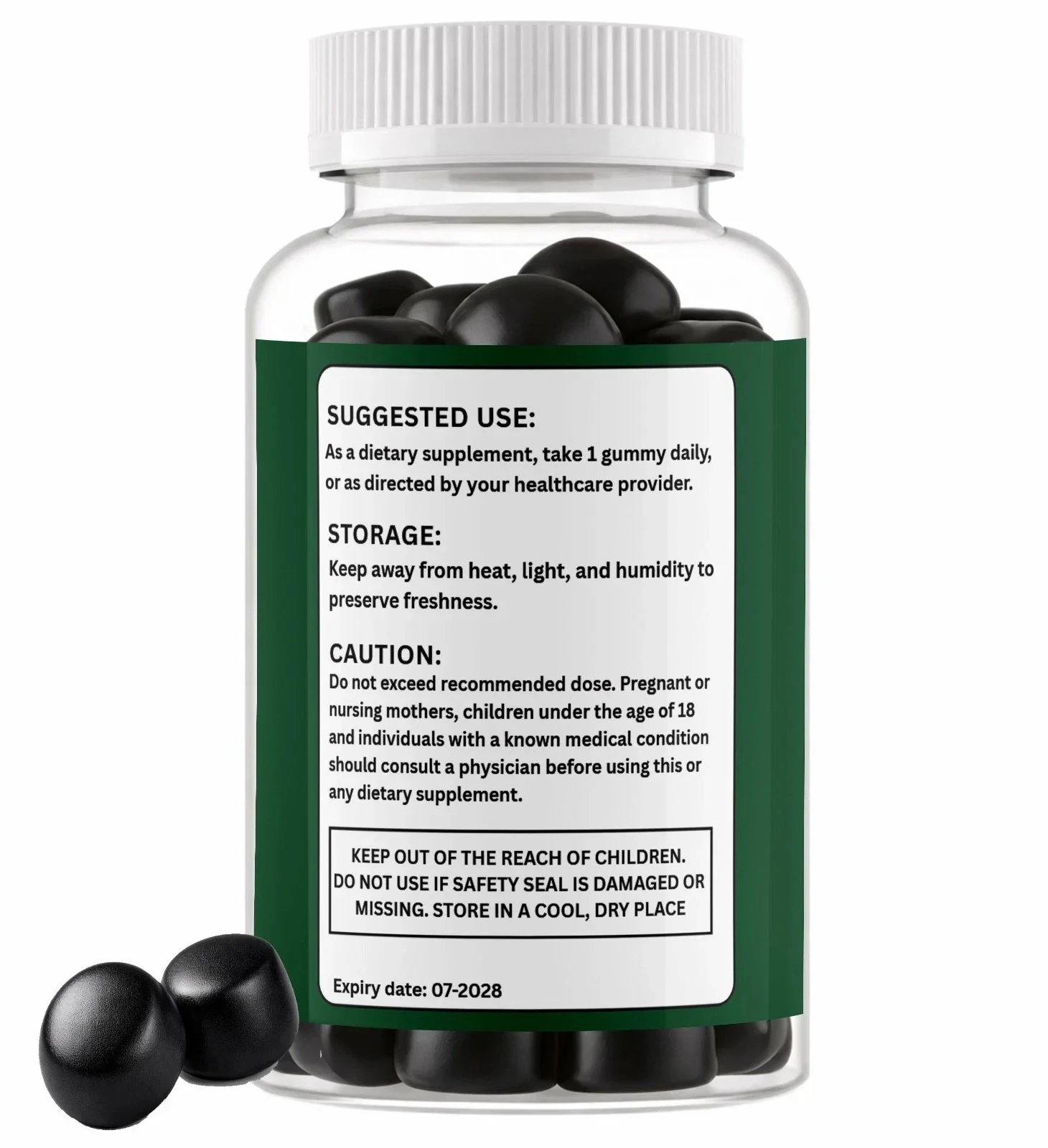
The line that matters most on the label
Dr. Judith Leone-Friedman reviews every page on this site before it goes live, including each blog post, the bottle facts and the ingredient notes. On the Military Honey Supplement Facts panel, the vitamin D row reads “Vitamin D3 (As Cholecalciferol) 84mcg 420%.” No other figure on the bottle matters as much. Vitamin D is the one ingredient here at a dose with a clear effect in the body, which is exactly why it deserves the most care.
Below, you will see what 84 mcg actually means, how it measures up against daily needs and the upper limit, who could gain from it, and who ought to check with a doctor before starting. Every reference figure here is taken from the vitamin D fact sheet published by the NIH Office of Dietary Supplements.
Micrograms and IU: one dose, two units
You will see vitamin D written in two different units. Current labels give it in micrograms (mcg), while older labels and many doctors still speak in international units (IU). Switching between them is easy: each 1 mcg of vitamin D is 40 IU.
That makes 84 mcg equal to 3,360 IU. In the same terms, the 20 mcg Daily Value works out to 800 IU, and the 100 mcg adult upper limit comes to 4,000 IU.
| Compared with | In mcg | In IU |
|---|---|---|
| 1 Military Honey gummy | 84 | 3,360 |
| Daily Value (the basis for the label’s %DV) | 20 | 800 |
| RDA for adults aged 19–70 | 15 | 600 |
| RDA for adults older than 70 | 20 | 800 |
| Adult upper limit | 100 | 4,000 |
| Taking 2 gummies | 168 | 6,720 |
Setting 84 mcg against your daily needs
The Recommended Dietary Allowance (RDA) is set to cover the needs of almost every healthy person. Adults aged 19 to 70 need 15 mcg a day, and adults past 70 need 20 mcg (NIH Office of Dietary Supplements, “Vitamin D: Fact Sheet for Health Professionals”). A single gummy supplies over four times the RDA.
The RDA is built on the assumption of very little sun, so it remains a safe goal even if you spend most days indoors. Plenty of people also pick up some vitamin D from sunlight, fortified milk, eggs and oily fish.
The upper limit (UL) answers a different question. It marks the highest daily intake that most people can keep up over the long term with little risk of harm. For adults that ceiling is 100 mcg a day, counting food, drinks and supplements together. One gummy, at 84 mcg, takes up 84% of it before anything else is added.
Who might benefit from this dose
Your body relies on vitamin D to absorb calcium, and it plays a part in keeping bones and muscles healthy. Running low is common, more so if you get little sun, have darker skin, are older, carry more body weight, or have a condition that affects how you absorb fat.
If your vitamin D runs low, you may feel tired and notice aching or weak muscles. Correcting a genuine deficiency can ease those symptoms, and that is the most realistic way this gummy could make a difference to your energy.
When your level is already in the normal range, adding more vitamin D probably won’t lift your energy. Research on vitamin D supplements in people without a deficiency has not found a clear benefit for energy or athletic performance.
Not much sunlight
Indoor jobs, the winter months, life at northern latitudes.
Getting older
Aging skin produces less vitamin D.
Darker skin tones
The same sunlight yields less vitamin D.
A low test result
Only a blood test can tell you for sure.
Stacking products: where the real risk sits
On its own, one 84 mcg gummy is not the concern. The concern is what you take alongside it. Plenty of multivitamins carry 20 to 25 mcg of vitamin D, some “immune” or “bone” formulas carry 25 to 125 mcg, and calcium supplements frequently add vitamin D as well.
Pair one gummy with a 25 mcg multivitamin and your day totals 109 mcg, past the upper limit. Pair it with a standalone 50 mcg vitamin D and the total reaches 134 mcg. Two gummies on their own come to 168 mcg.
| Your daily routine | Total vitamin D | Against the 100 mcg UL |
|---|---|---|
| Just 1 gummy | 84 mcg | Within the limit |
| 1 gummy plus a 25 mcg multivitamin | 109 mcg | Over the limit |
| 1 gummy plus 50 mcg of vitamin D | 134 mcg | Over the limit |
| Taking 2 gummies | 168 mcg | Far over the limit |
What too much vitamin D can do
Because vitamin D dissolves in fat, your body holds on to it, and levels climb gradually over weeks. Taking too much for a long stretch can push blood calcium too high, a state called hypercalcemia. It can show up as nausea, vomiting, constipation, a poor appetite, weak muscles, confusion, strong thirst and a frequent need to urinate. If it continues, high calcium can lead to kidney stones and damage to the kidneys and blood vessels (NIH Office of Dietary Supplements, “Vitamin D: Fact Sheet for Health Professionals”).
Serious toxicity is uncommon. It usually follows very high doses taken for a long time, often from a mislabeled product or a big mix-up over how much to take. For most healthy adults, keeping the daily total at or under the upper limit keeps that risk low.
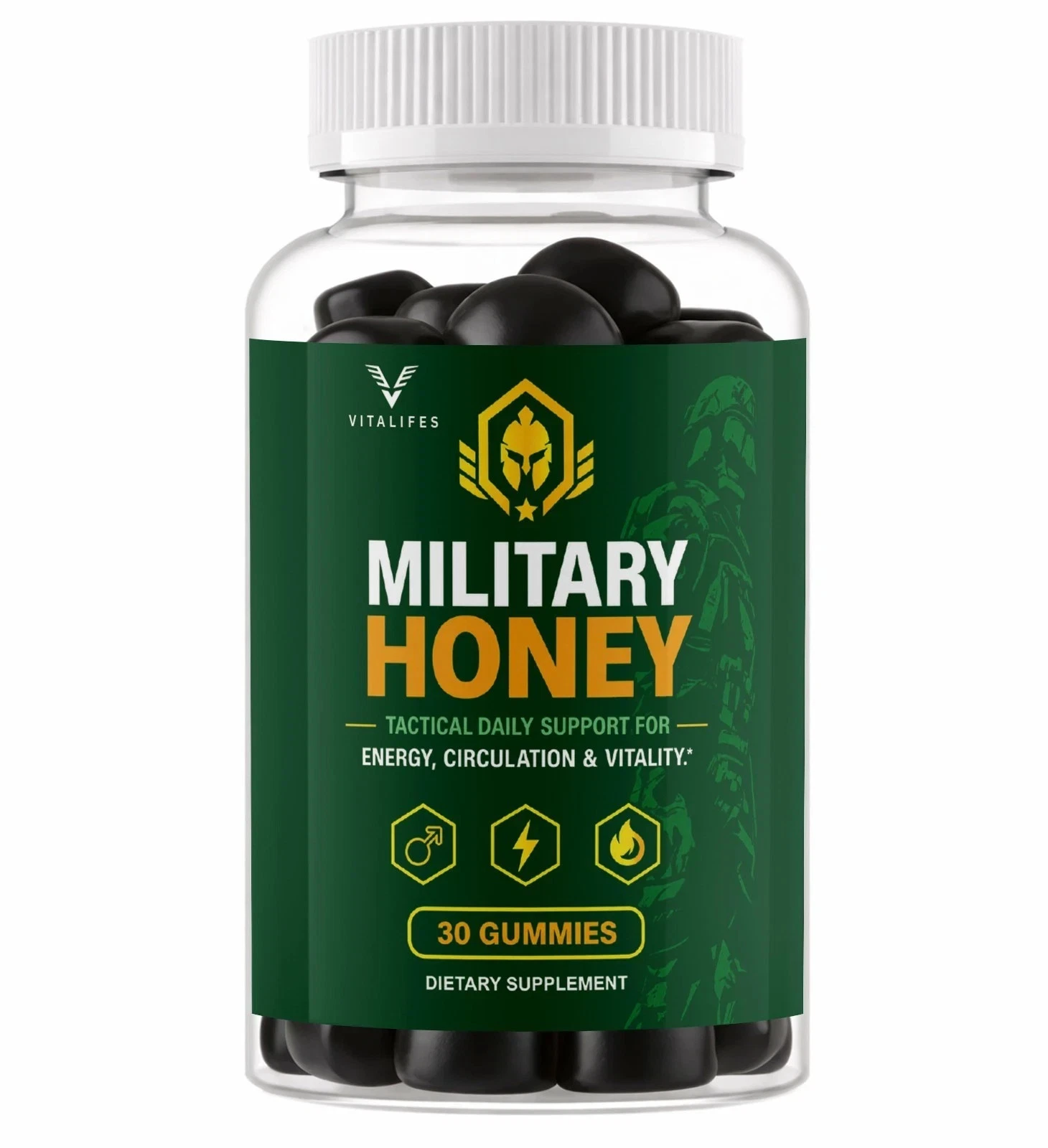
Give the whole Military Honey label a read before you place an order.
Check today’s priceMedicines and health conditions to clear with a doctor
| If this applies to you | The reason to ask |
|---|---|
| Thiazide diuretics, such as hydrochlorothiazide | They cut the calcium lost in urine, so adding vitamin D can push calcium up |
| Digoxin | Raised calcium makes heart-rhythm problems more likely |
| Steroid medicines, for example prednisone | They can pull vitamin D levels down, so doses may need changing |
| Orlistat and certain cholesterol medicines | They may lower how much vitamin D you absorb |
| Kidney stones or kidney disease | The body already handles calcium differently |
| Sarcoidosis or parathyroid disease | These can drive up calcium and vitamin D activity |
You will find these interactions, and more, in the NIH fact sheet (NIH Office of Dietary Supplements, “Vitamin D: Fact Sheet for Health Professionals”). The Military Honey label also asks anyone with a known medical condition to consult a physician.
Using a high-dose vitamin D product sensibly
Know your starting level
Ask your doctor whether a 25-hydroxyvitamin D blood test makes sense for you.
Add up all your sources
Include multivitamins, calcium supplements, “immune” blends and fortified drinks.
Take one gummy with food
Some fat in the meal helps your body absorb it.
Skip, don’t double
Forgot a day? Leave it, and take your usual single gummy the next day, not two.
Test again later
After a few months, your doctor may want to check your level again.
Where the “honey” and the herbs fit in
The brand name and front label lean on military styling and herbs, yet the Supplement Facts panel tells a different story. Each of the four herbs comes in at 100 mcg, or 0.1 mg. The label lists no honey; the name is simply the brand’s. Boron is present at 7 mg.
Put simply, vitamin D is the ingredient in a Military Honey gummy that your body is most likely to register. So getting to grips with that single line of the label tells you more than any piece of marketing.
The takeaway
At 84 mcg (3,360 IU), the vitamin D3 in each gummy is a high daily dose, but a legal one, at 420% of the Daily Value and 84% of the adult upper limit. If your vitamin D is low, it may help. If it is not, a lift in energy is unlikely.
Keep to one gummy a day at most and total the vitamin D in everything else you use. If you are on thiazides, digoxin or steroids, or have kidney or parathyroid problems, check with your doctor before you begin.
Sources
- NIH Office of Dietary Supplements. Vitamin D: Fact Sheet for Health Professionals. NIH ODS, current revision. Checked September 22, 2026.
Questions on this topic
Anything else? The Military Honey FAQ has 35 answers.
What is 84 mcg of vitamin D in IU?
3,360 IU. Multiply mcg by 40.
Is 84 mcg of vitamin D safe?
For most healthy adults it falls just below the 100 mcg upper limit. Get advice before adding any other vitamin D.
Is it okay to combine Military Honey with a multivitamin?
Look at how much vitamin D the multivitamin has before you combine them. Plenty carry 20–25 mcg, enough to take your total past 100 mcg.
How does too much vitamin D show up?
High calcium can bring on nausea, vomiting, weakness, confusion, thirst and a frequent need to urinate.

Start your daily Military Honey routine
Choose one, three, five or six bottles and the checkout shows your price before you pay. The money-back guarantee follows the terms printed on your listing. Questions before you order? The contact page explains which desk to use.
Sold by a USA authorized Military Honey retailer. This site does not make the product and earns when you order through its buttons.